
Yep - yours truly!
I hate to even post this as I always post everything I do for free. I don’t want to put a paywall between this work and teachers who are already underpaid. Resources - like buying books, paying for my website, blog, etc. - gets expensive when funds are tight. If you use my resources and would like to send a little support, I’d appreciate it. If you can’t, I understand and I’ll keep on posting anyway! Thank you to everyone for all of your support over the years!

Any donation is appreciated - thank you!
World War One Resources
I get into a lot of these types of lessons in my Eisner nominated book, Teaching with Comics and Graphic Novels ISBN 9780367520373 – available from Routledge, Amazon, Barnes and Noble, etc.
Poems – we read and annotate Dulce et Decorum Est and Flanders Fields. After discussing, we then watch - https://www.youtube.com/watch?v=KP6uHhe9jBI - Dulce Et Decorum Est Animation and WWI Aftermath: HD Colorized Flight Over Flanders Fields (1919 Doc) – a colorized film of a pilot flying over Flanders in 1919 – really showing the damage that was done.
We also spend a lot of time annotating and analyzing propaganda from WWI. I also recommend a great book – Star Wars Propaganda ISBN 9780062466822 – gives original propaganda posters from the Star Wars universe from the perspectives of both the Rebel Alliance and the Empire. My students love it.
We also do a book tasting in an 80 minute period. Students choose three books from my collection and jot down three things they learned and one thing they wondered. They then meet with a partner and teach each other about what they have learned.
Comics/Graphic Novels
The Great War. July 1, 1916 The First Day of the Battle of the Somme. – Joe Sacco. A 24-foot-long tapestry comic detailing the first 24 hours of the battle. Wow! I have three copies and lay them across my room. The students grab clipboards and read the wordless images – using visual evidence to analyze what they see and to raise questions to lead us in our research. This is the book I use on day 1 in my WWI unit. I cannot recommend this book enough. There is a great interview with Joe Sacco here - The Great War by Joe Sacco
Treaties, Trenches, Mud, and Blood: A World War I Tale – Nathan Hale. My students read this in 8th grade and they love seeing it again in my 10th grade class. Really explains the war in an accessible and engaging way.
Above the Trenches – Nathan Hale. All about the Lafayette Escadrille and an excellent pair to Treaties, Trenches, Mud, and Blood – I show parts of the Flyboys movie as well as it focuses on the Lafayette Escadrille.
Now Let Me Fly: A Portrait of Eugene Bullard – Ronald Wimberly and Brahm Revel. Perfect companion to Flyboys and Above the Trenches – we spend some time researching the inspiring Eugene Bullard as he fought against racism.
The Mythmakers: The Remarkable Fellowship of C. S. Lewis and J. R. R. Tolkien – John Hendrix. An insightful look at these two impactful authors, with WWI as a major impact. Very well researched. Fans of these authors absolutely love this book and are fascinated by the connections between real-life and fantasy.
Charley’s War – Pat Mills and Joe Colquhoun. Part of a weekly British comic, now collected. Haunting.
Goddamn This War! and It was the War of the Trenches – Jacques Tardi. Well researched. Absolutely haunting images that take full advantage of the comics medium – I use many pages as examples in my classes to show students how to make their own comics. Really like reading a movie.
All Quiet on the Western Front – adapted by Wayne Vansant. We do some text to text comparisons – students read different parts of the original prose, then look at the same parts in this powerful adaptation. Students discuss the similarities and differences – what they would keep and what they would change. We also watch several clips from the three versions of the movies.
Enemy Ace: War Idyll. George Pratt. DC Comics. An up close and personal look at the air war. The watercolor artwork adds depth and emotion to the history.
World War One: No Man’s Land – Gary Reed and Charles Yates. French soldiers on the Western Front.
True Stories of World War One – Nel Yomtov and Jon Proctor. Short stories on land battles, Lusitania, Red Baron, Gas Attack, and more.
The War to End All Wars: World War One – Alan Cowsill and Lalit Kumar Sharma. Full overview of the war – I use several pages as examples for my students making their own comics. Several haunting pages.
Captain America’s Bicentennial Battles – Jack Kirby. A collection of stories with Captain America in wars throughout American history – including the future. In the WWI story, Cap is a pilot in a biplane… nerdy awesomeness.
Trench Dogs – Ian Densford. An anthropomorphic look at the war with a deep focus on experiences in the trenches. Lots going on in the images and well researched. Also has a teacher guide on the publisher’s website - http://iandensford.com/
The World War I Web – Bentley Boyd. A full historical overview of the war.
Line of Fire: Diary of an Unknown Soldier – Barroux. An adapted, translated, and illustrated account from one French soldier’s diary. A fascinating and harrowing look at WWI through a primary source.
In Flanders Fields – adapted by P. Craig Russell. We read and annotate the Flander’s Fields poem by John McCrae. This adaptation takes the words from the poem and overlays them on illustrations from 9/11. So powerful. Students discuss the images and how these same words can be used to describe both horrific parts of history. (This is from a collection of comics in 9-11 Artists Respond, Volume One ISNB 9781563898815 – the money raised was used to help the victims of 9/11).
The Harlem Hellfighters (I also have it in Spanish) – Max Brooks and Caanan White. Just so powerful. Students immediately seek it out. I pair this with two prose books – The Unknown Soldiers: African-American Troops in WWII – Arthur E. Barbeau & Florette Henri and The Harlem Hellfighters: When Pride Met Courage – Walter Dean Myers and Bill Myers.
The Art of World War I – Ephraim Durnst. A powerful collection of artwork made during WWI from multiple countries. Absolutely haunting art – and a solid way to showcase visual literacy through symbolism and background.
Happy Days – Alban B. Butler, Jr. Comic first published in 1928.
Traces of the Great War – a collection of comics about WWI. Powerful. One story is not school appropriate – just a heads up.
Fever Year: the Killer Flu of 1918. Don Brown. All about the “Spanish” Flu. I pair this with More Deadly than War by Kenneth C. Davis – a prose book that taught me a lot.
Archie’s War: My Scrapbook of the First World War. Marcia Williams. A fictional diary of a child that includes take out letters.
Picture Books
Winnie – the True Story of the Bear Who Inspired Winnie-the-Pooh – Sally M. Walker and Jonathan D. Voss
First World War sticker book – ISBN 9781409537809. Who doesn’t love stickers?
Prose
I have a lot of books I have inherited from my Dad and found at library sales, clearance sales, etc. I won’t list them all – but I try to get all reading levels – early through university. Time Life books that are collections of photos. Books about the history of the soldier, ships, planes, battles, etc. that have WWI has one part of a larger history.
To the Last Man – Jeff Shaara. Historical Fiction. I have used these in my AP courses after the AP Exam. I have a class set and I split the class up to read and report on only the sections they are assigned. There are four main characters that give completely different views of the war. It really showcases the power of literature circles in a content area classroom.
First World War Atlas – Martin Gilbert. 170 maps on the war. I copy 15-20 of them in a packet for groups of four students. They then go through and interpret the importance of geography on the strategies and outcomes of the war. Maps tend to get overlooked in classes
DK Findout! World War I. A lower level reader that gives a great overview.
DK Eyewitness Books – World War I. I have always been in love with this entire series.
DK World War I. Great collection of images and an overall summary of the war.
Generals Die in Bed – Charles Yale Harrison. Historical fiction.
The First World War. Hew Strachan.
Paris 1919. Margaret Macmillan.
Indian Soldiers in World War I: Race and Representation in an Imperial War. Andrew Jarboe.
The East Africa Campaign 1914–18: Von Lettow-Vorbeck’s Masterpiece. David Smith.
The Great War: An Imperial History. John H. Marrow.
World War I: Witness Accounts. Janice Anderson. A powerful collection of primary sources.
The War that Ended Peace – Margaret MacMillan
Here are three free online comics about WWI, created by students - https://www.nationalarchives.gov.uk/documents/education/armistice-and-legacy.pdf
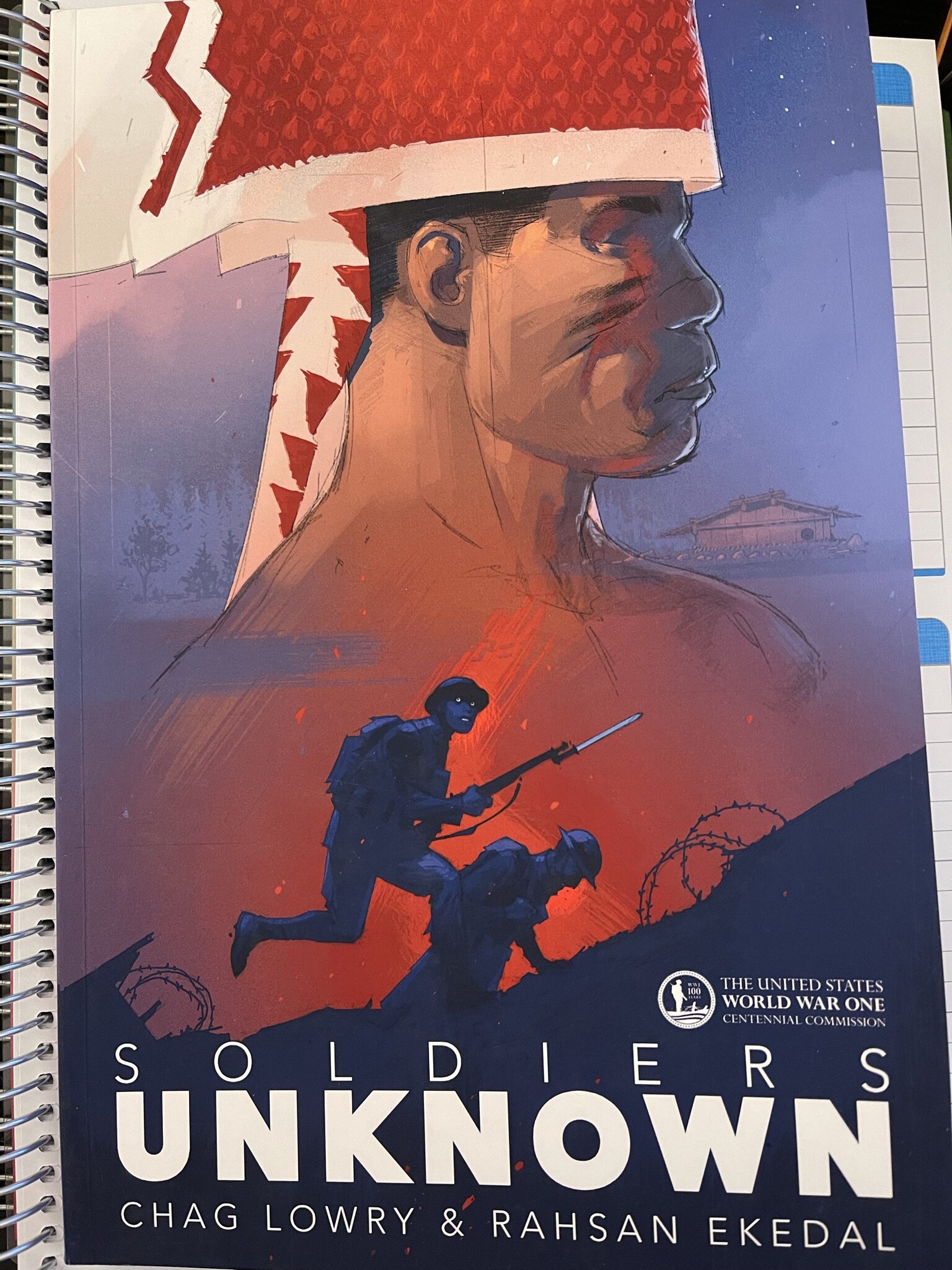
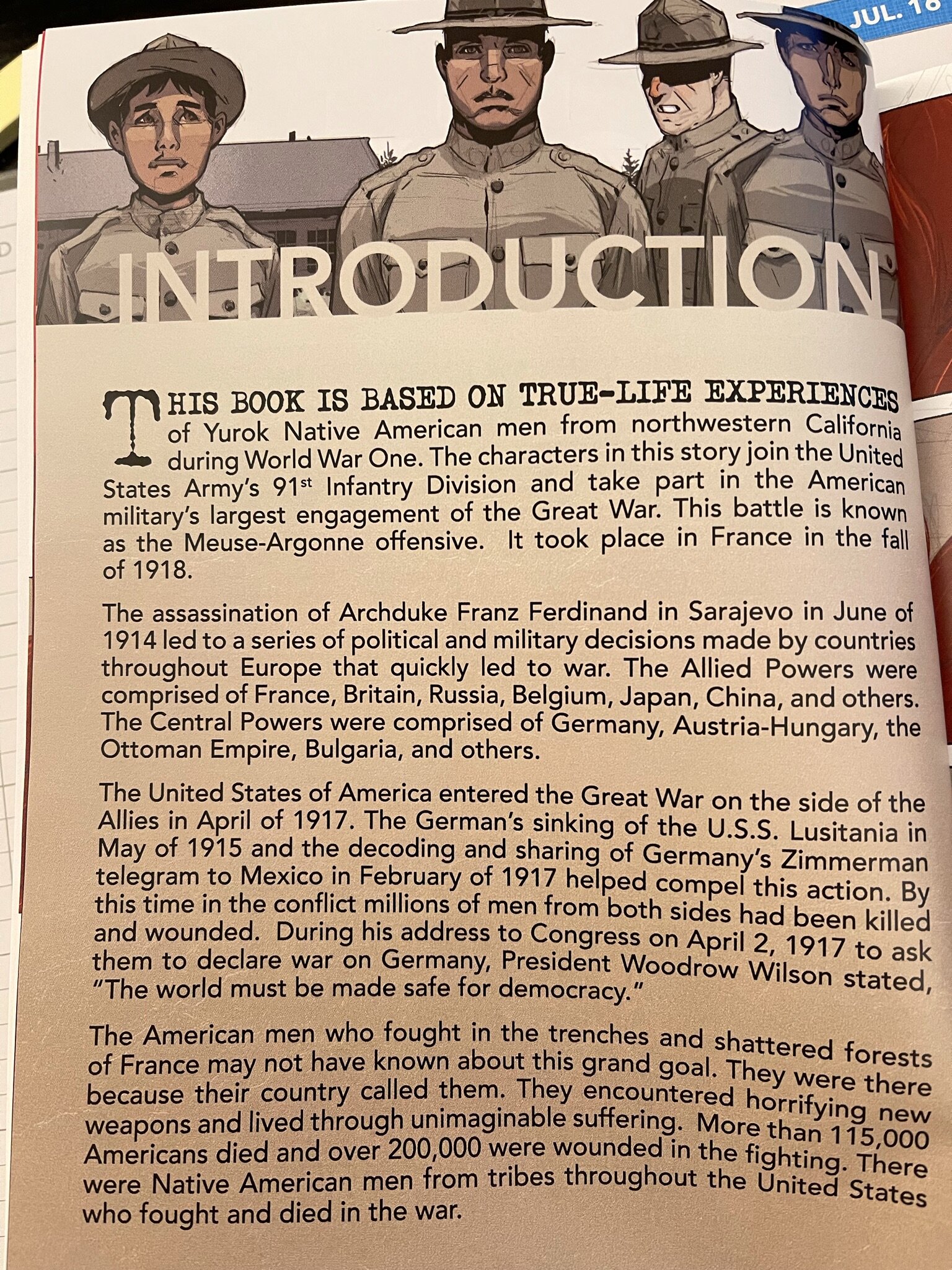
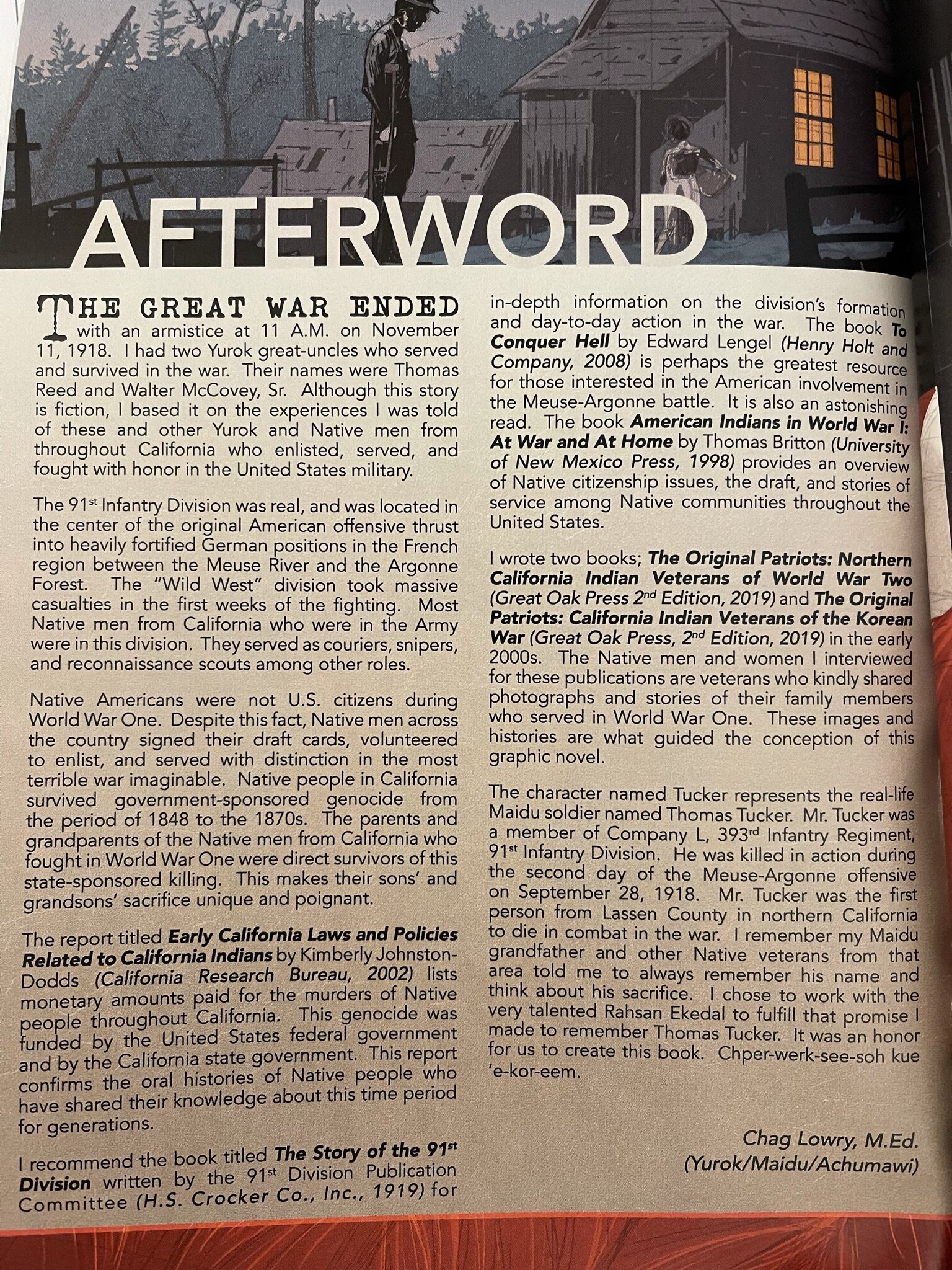
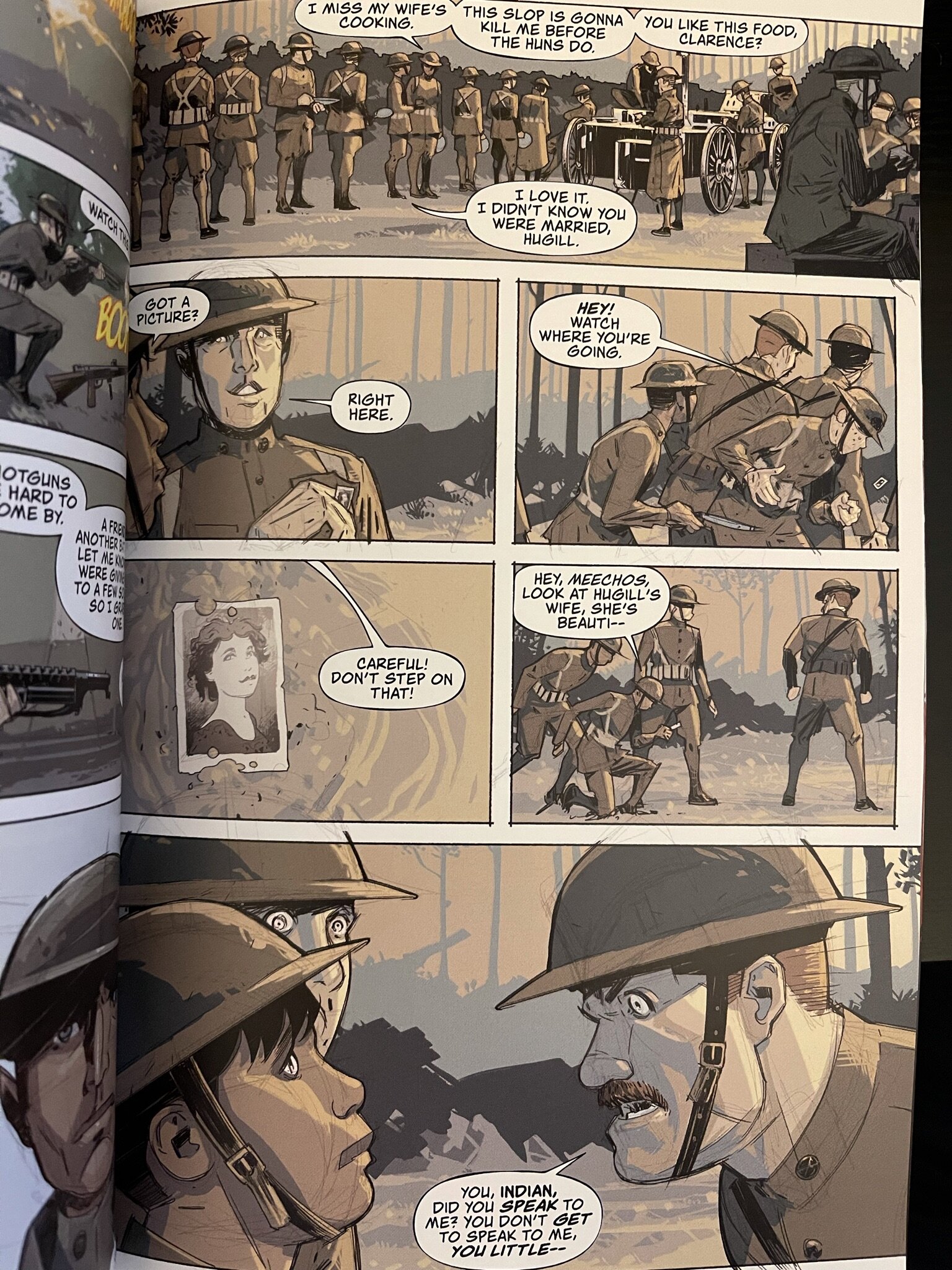

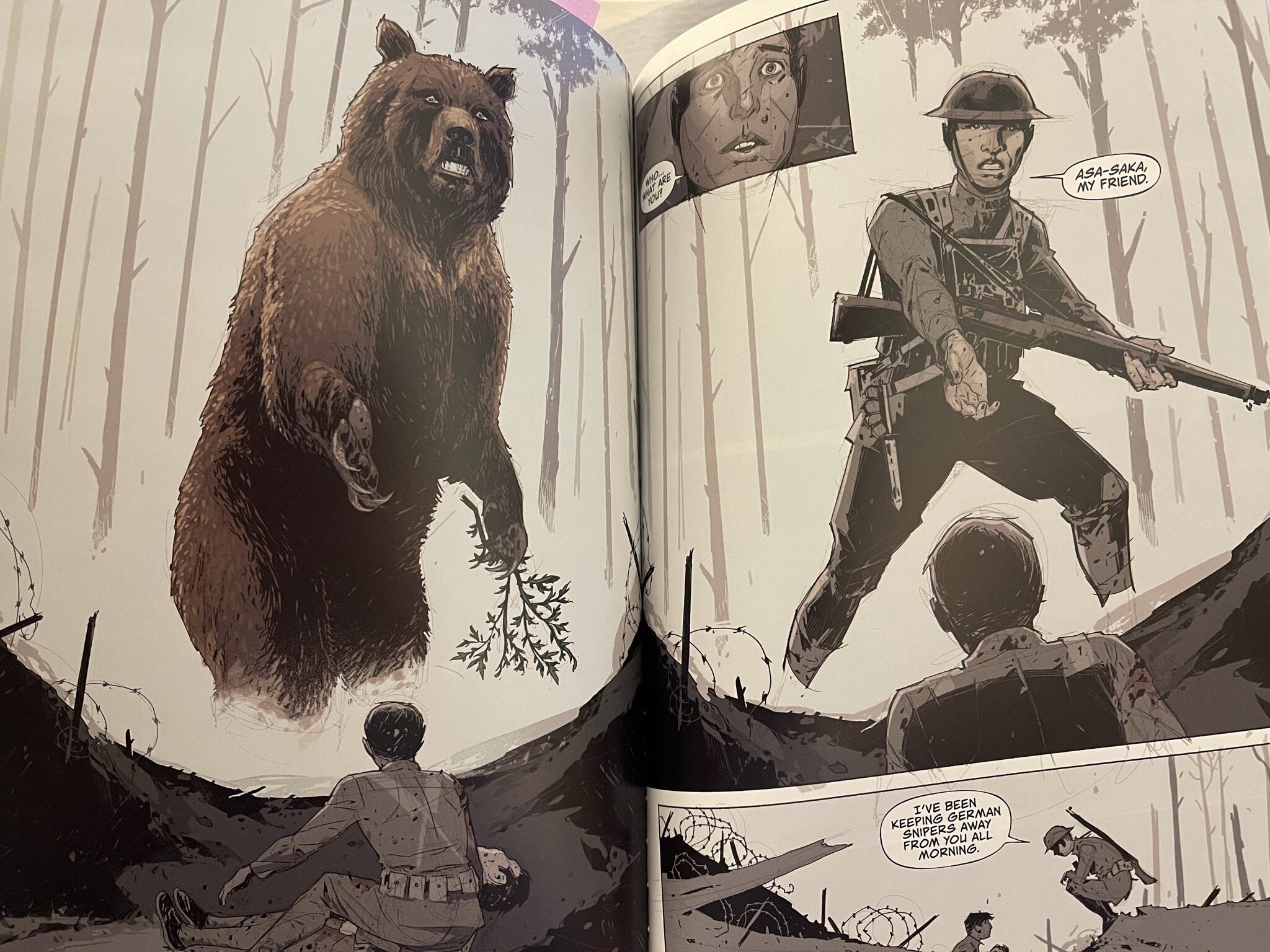
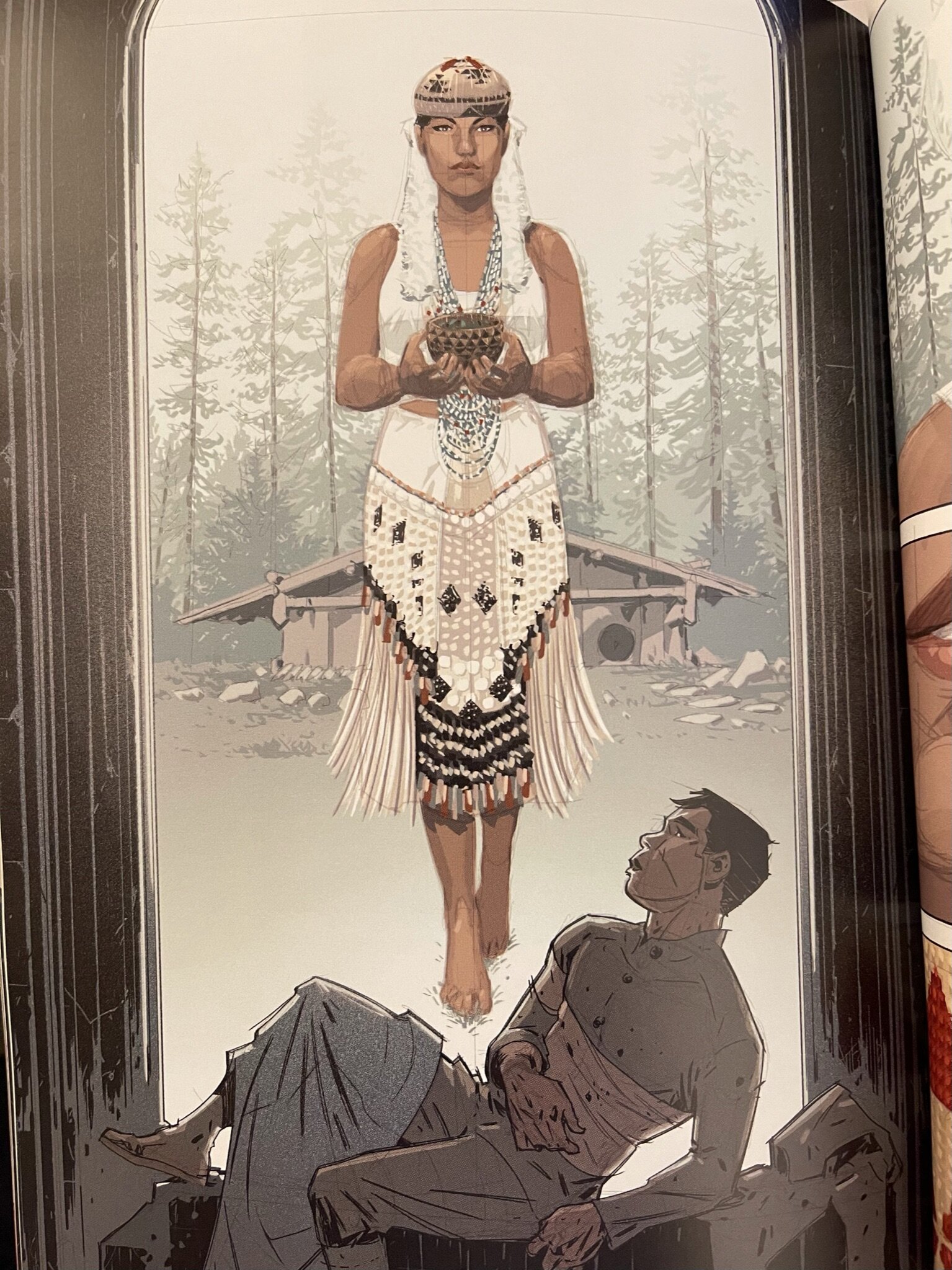
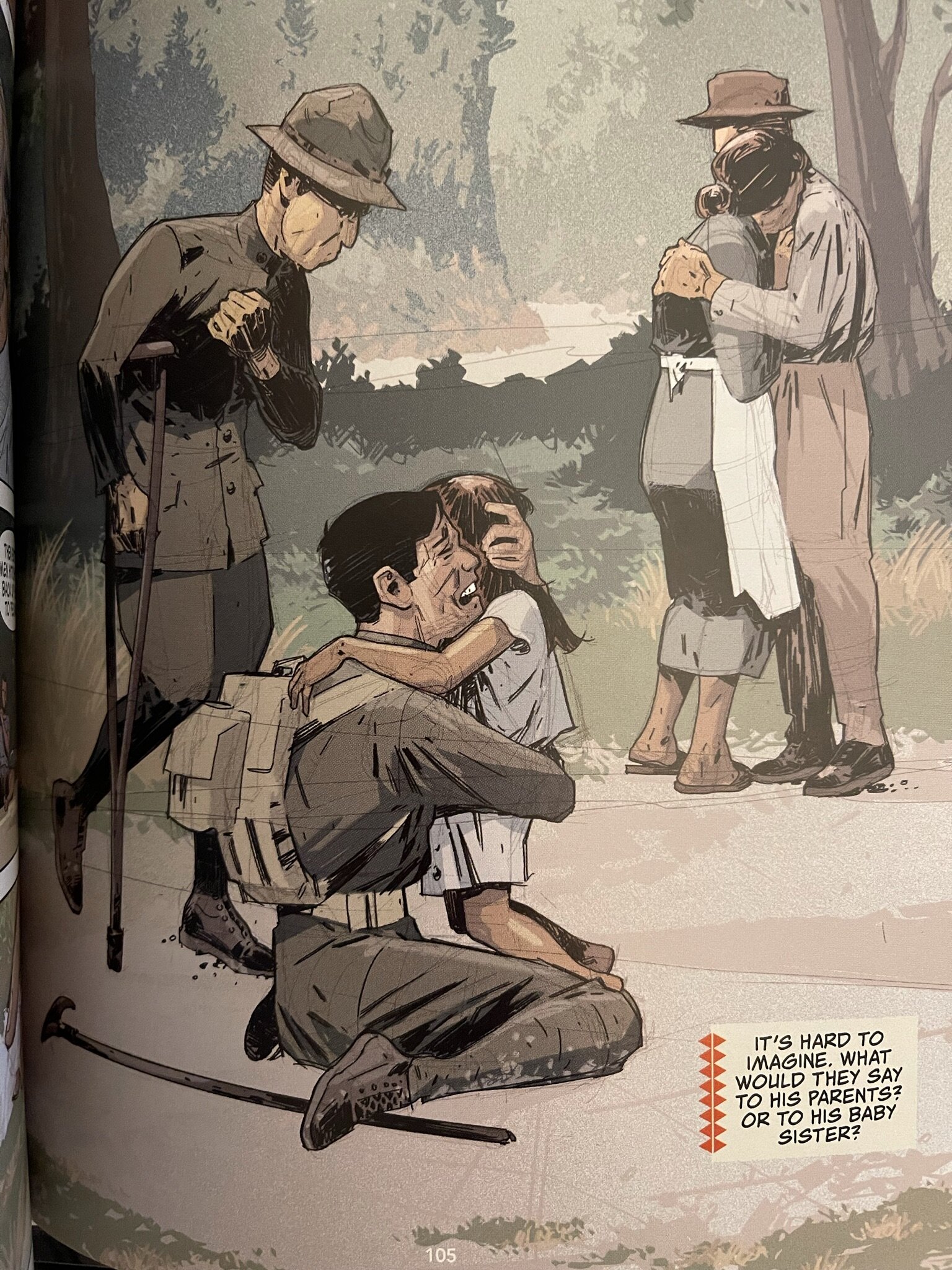
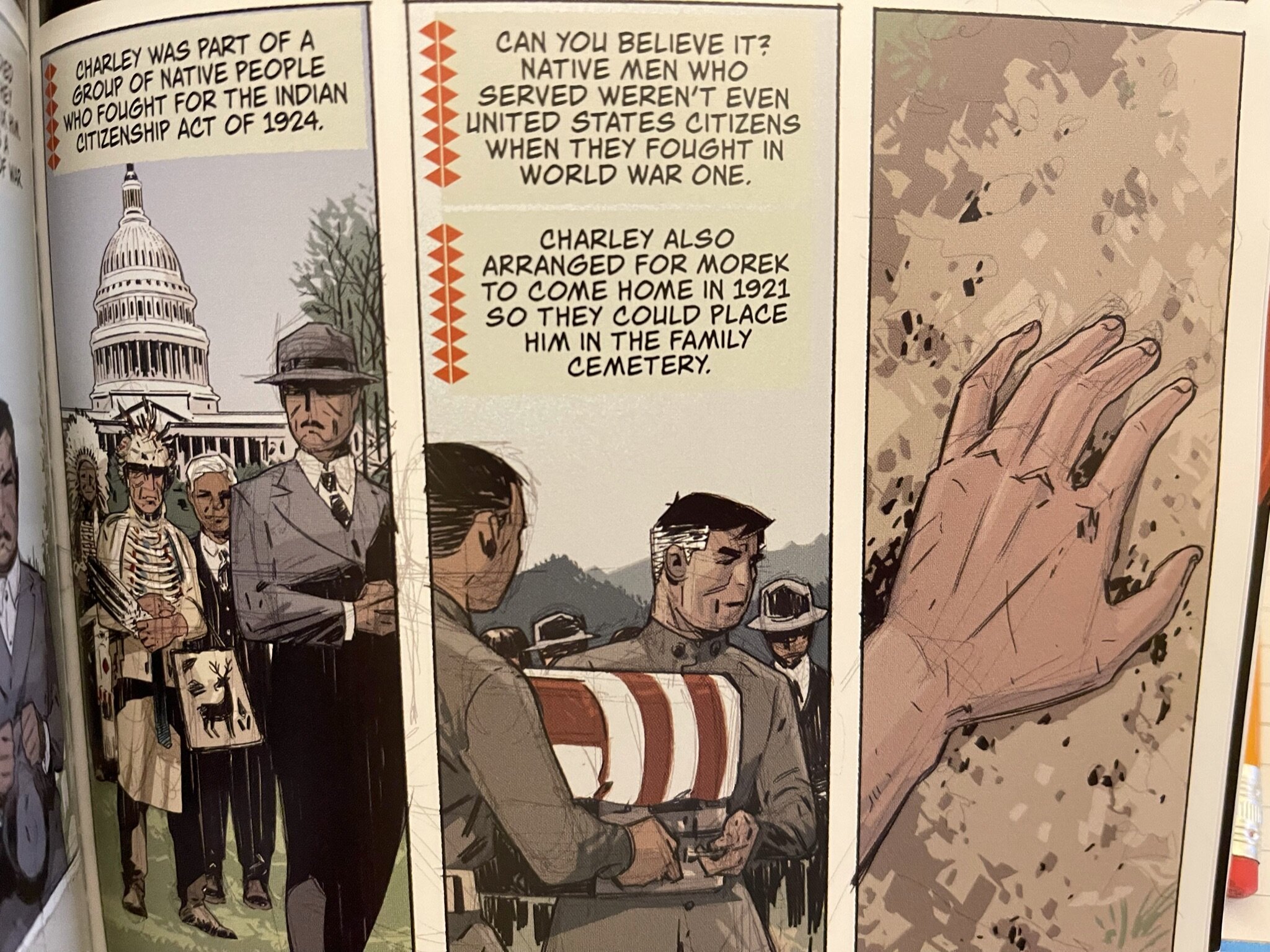
Soldiers Unknown. Chag Lowry and Rahsan Ekedal. Great Oak Press. 2019.
My HIGHEST recommendation. I need to get a class set of this stunningly powerful book! This book had such an emotional impact on me that I found myself pausing to reflect often when reading. This is the type of literature that we need in our classrooms as we build a more comprehensive and inclusive history and comics are the perfect way to do it. Soldiers Unknown gives a solid history of WWI and the experiences of leaving home, training, trench warfare, and an honest look at the aftermath. The illustrations are just so impactful and add so very much to the experiences of the soldiers in a way that no other medium can do. I felt as though I was in the story and physically reacted during several parts of the book. BUT - add in the too often ignored impact of the Native American community and this book becomes a MUST for the classroom. The internal conflict for these men and their families - going against tradition, fighting for a country that treated them as less than human…. This book NEEDS to be made into a movie. I am going to pair this with They Called Us Enemy from George Takei and the experiences of Japanese-American soldiers in WWII. We will also use this book as a vehicle to discuss historiography and how anyone can have an impact on our historical understanding and that are stories need to be valued.


From the back of the book - "1915. WWI rages in Europe... but it is a war of wizards, dragons, vampires and magic as much as a war of bullets and barbed wire."
Teacher Thoughts -
This is not a true history book - it is set in an alternate reality with monsters, wizards, flying soldiers, etc. That being said - there are plenty of allusions and connections to be had --
The United States of Columbia (NE USA) is not yet involved in the European war. Some Americans volunteer for the escadrille to fight against the Prussians. Trench warfare. Lufbery is a character. A magical bombing raid destroys a city -- could be compared to WWII and Dresden. The magic mist that turns soldiers against each other looks and acts a lot like mustard gas. This is not a book that I would use to teach WWI, but I will certainly add to my classroom library to be read as extra credit. It certianly raises some interesting questions about alternate universes, etc. I had fun reading it.


Factual?
Excellent - offers sources, further reading, etc. as well.
Teacher Thoughts
The book begins with the origins of planes in warfare and the development of tactics - not too detailed - just enough to give some background and to help lead for more research - well done. Funny - description of unarmed pilots throwing wrenches at each other before guns were mounted on the planes. Maps and land battles are also included - very well explained. Tanks, Russian Revolution, American entry into the war - are all covered in this book.
There are so many aspects of WWI included in this book - major battles, individual airmen from both sides, technology, tactics, funny anectodes, etc.
Connections
The movie Flyboys is an easy connection - great movie and widely available on Netflix and Amazon Instant. Page 10 has a direct connection to the movie.
I also have my AP Euro students read To the Last Man by Jeff Shaara and we use it as a literature circle.
Lesson Ideas
Students could be split into small groups and assigned one part of the book. They could then complete more research on the men, tactics, battles, etc included in the section. Assign roles - cartographer, tactician, biographer, artist, etc.

Reading Level - HIgh School - violence and sexual innuendo
Length -
Basic Premise -
All African-American fighting unti in WWI.
"The Harlem Hellfighters is based on the Army's 369th infantry division, an African American unit fighting in Europe during World War I. Breaking down racial barriers, the unit spent more time in combat than any other American unit, never losing a foot of ground to the enemy, or a man to capture, and went on to win countless decorations.
Though they returned to the U.S. as heroes, the unit faced tremendous discrimination, even from their own government. The story chronicles their journey from the enlistment lines in Harlem to the training camp at Spartanburg, South Carolina, to the trenches in France."
Factual?
Although a ficitonal account, it is based on real events. The bibliography is fascinating and extensive.
Teacher Thoughts
OK - I hate to admit this - but I had no idea that this highly decorate unit existed in WWI. This is a fascinating story - yes, it gets into some uncomfortable terrain with racial issues - but the story is not just about the black troops being treated unfairly, but also about their bravery and being brave men - regardless of color. This would ignite all kinds of fascinating discussions in the classroom - I am looking forward to having students read it. The best part is that, regardless of the racial issues, it is still a great book about WWI in general and teaches about gas attacks, machine guns, trenches - rats, lice, etc.
Connections
GOING TO BE A MOVIE SOON! SONY PICKED UP THE MOVIE RIGHTS IN 6/2014
Potential Issues
Sexual innuendo, some violent images (nothing over the top), racial issues

All of WWI - minus the air war.
Teacher Thoughts
There is a whole lot of info in this little book - perhaps too much. The different countries were represented by animals (sort of like Maus) - the Russian Bear, British Bulldog, etc. This seemed to be more confusing than helpful when reading through the book. However, once you get used to it, the information really is quite comprehensive - but I think students would struggle to make sense of all that is thrown out at once.
Lesson Ideas
Have students research the national animals of each country and create caricatures to represent strengths/weaknesses.


Reading Level - 8th and up
Length -
Basic Premise
The two main characters are a WW1 ace (Hans von Hammer - a Richthofen-type personality) and a Vietnam Vet (Mannock) who compare their war experiences. The author really makes one think when looking at the two conflicts - personal VS impersonal, chivalry VS slaughter, survivor's guilt VS making the most out of life, etc.
Teacher Thoughts
I am not an artist, but the illustrations blew me away - there are so many water color type drawings that I would hang up on my wall. The dark and blurred depictions add much depth to the storyline and I found myself getting lost in them. As for the story itself, I enjoyed the prose from writers in WWI that were included throughout - deep thoughts, as the saying goes. This would be a neat book to have students compare Vietnam and WWI - or modern conflicts VS WW1 in general.
Connections
My Lai Massacre, Flyboys movie
Lesson Ideas
Mini - Research project - students could be assigned roles and create a presentation based in comparing weapons, tactics, etc of the two conflicts. Were the two wars really that different? Did chivalry really exist during WW1 air battles? Did it really even exist during the Middle Ages? Connect to the Geneva Convention - do rules in warfare work? What rules would you put into place? My Lai Massacre - were there incidents like this during WW1? Would rules of war prevent these type of incidents from happening? What should happen to those who break these rules? COMpare to the Nazis and Japanese during WW2.
Language Arts - Mannock comes to some conclusions about his life and war experiences - does your view of him match his own? Is he guilty?

Achi Baba Gallipoli 1915. Magic Torch Comics. FREE to read on line -
https://issuu.com/magictorchcomics/docs/achi_baba__flipping_book_version_


This stretches out across the entire back wall of my classroom!
Lesson Ideas
Have students walk the length of the comic - then assign small groups to write down what is going on in different sections - then compare to the author's notes. When streteched out, the panels just about cover the width of the classroom - amazing! The comic comes with a detailed guide explaining what is going on in each panel. I photopcopied these explanations and placed them in front of the respective panels and had teh students complete a gallery walk. An alternative would be to number each section and have the students create their own definition/explanation of what is going on - then explain to the class.
Use this as an example to have students create their own long mural about a topic.


